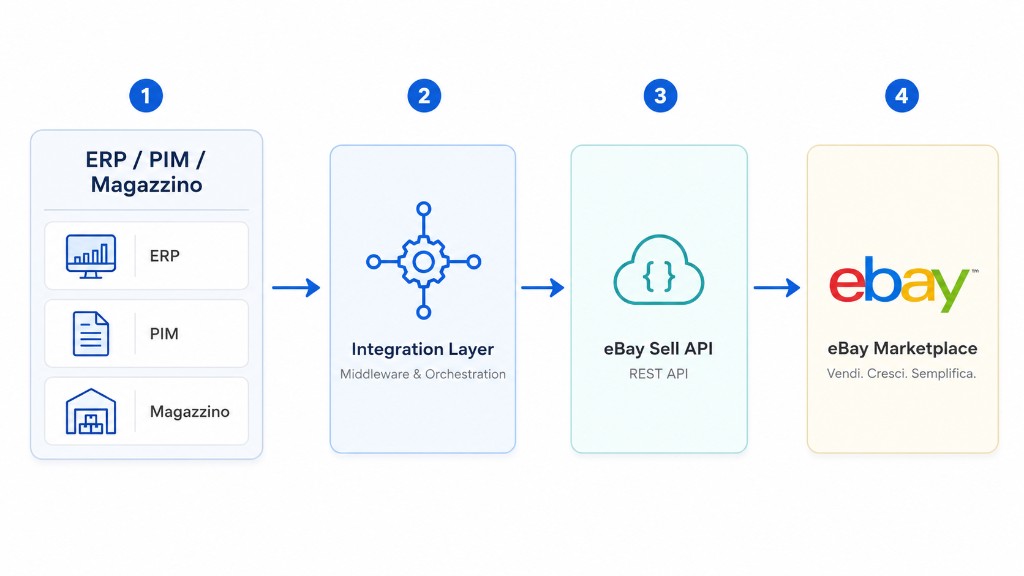
eBay Sell API: a practical guide for developers (2026)
Inventory, fulfillment, payouts and Azure architecture: how to build a reliable seller-side integration between ERP, PIM and eBay.
Read guide →Integrations · Microsoft Azure · Marketplaces
Practical guides to eBay's seller-side APIs: Sell API, Inventory, Fulfillment, Finances and migration from the Trading API, to integrate eBay with ERP and PIM.
Inventory, fulfillment, payouts and Azure architecture: how to build a reliable seller-side integration between ERP, PIM and eBay.
Read guide →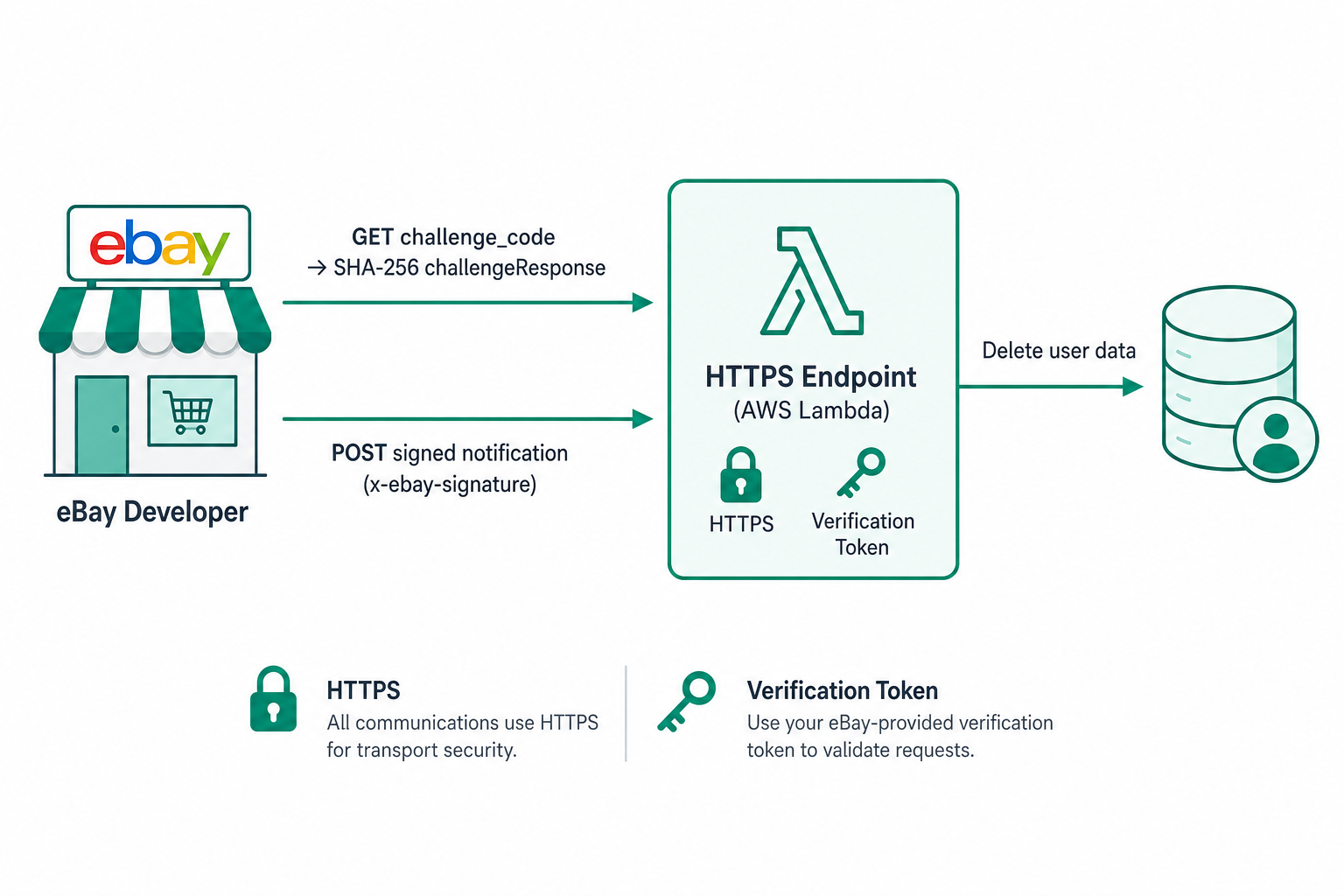
From developer registration to the production keyset, OAuth and the Marketplace Account Deletion endpoint: every step, challenge and signature validation included.
Read guide →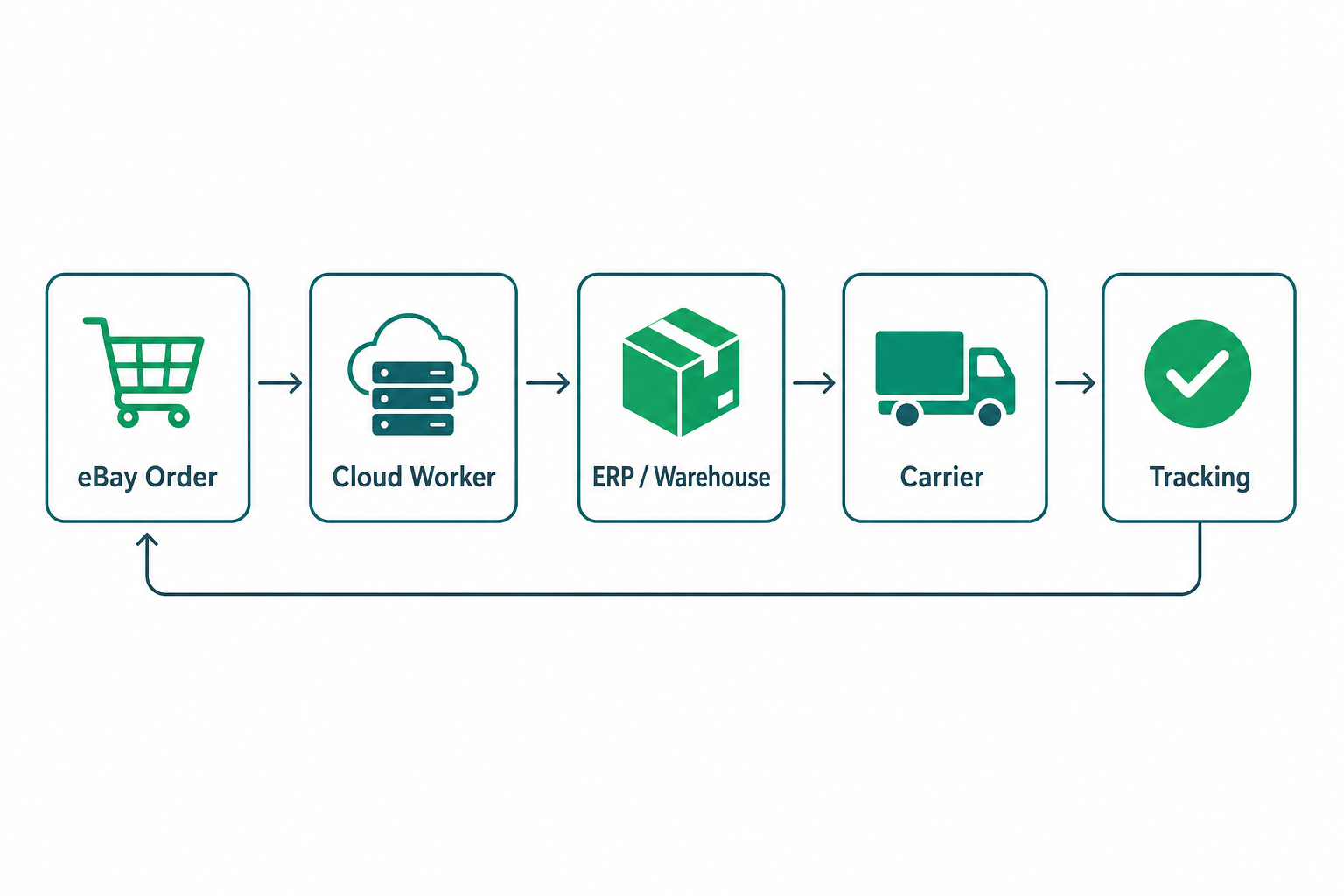
From the eBay order to tracking: import, statuses, fulfillment and shipment updates with reliable asynchronous flows.
Read guide →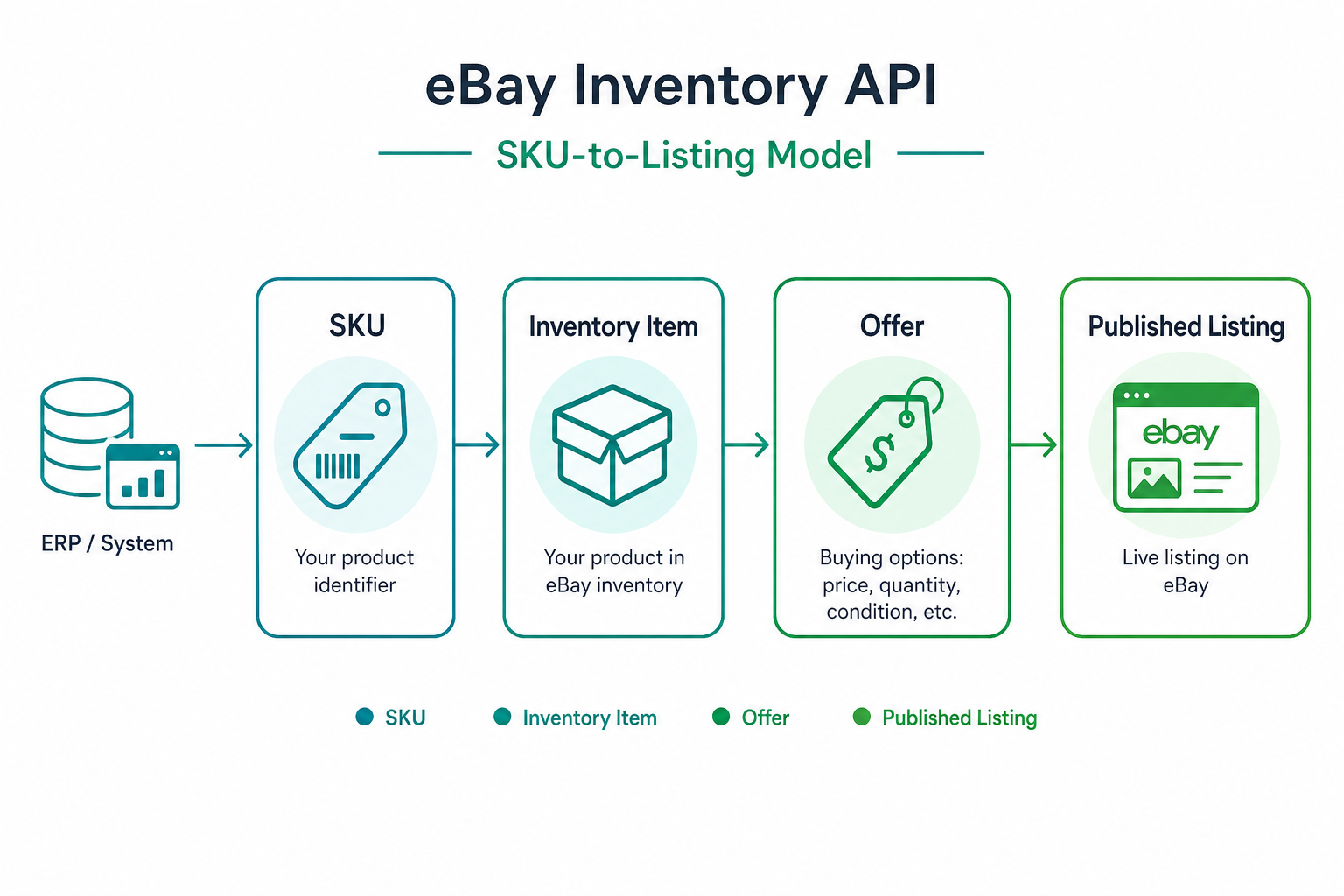
SKU model, inventory item, offer and publication: how to align your ERP catalog with eBay without rebuilding listings every time.
Read guide →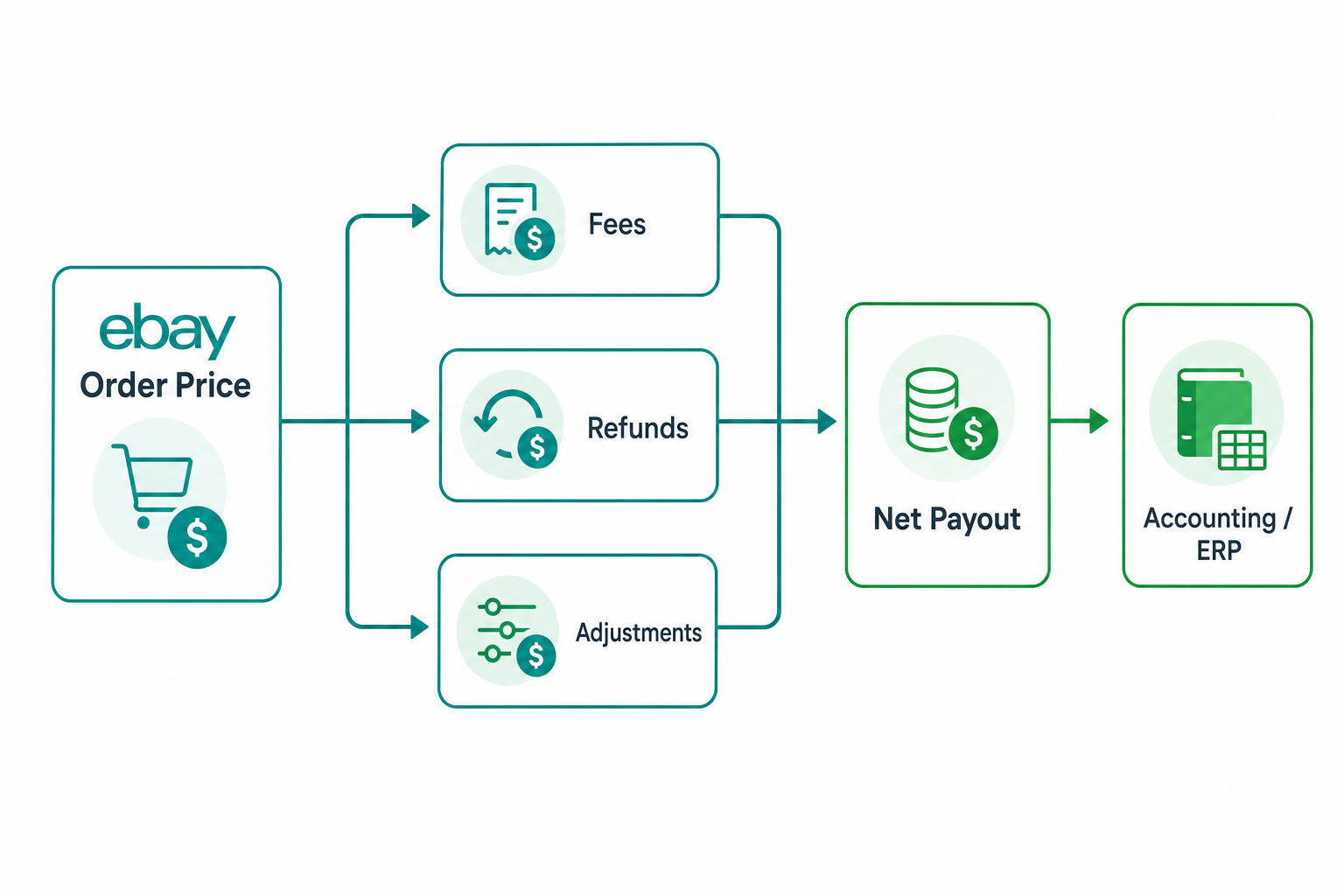
Why an order is not a cash-in: read transactions, fees and payouts with the Finances API and reconcile them with ERP and accounting.
Read guide →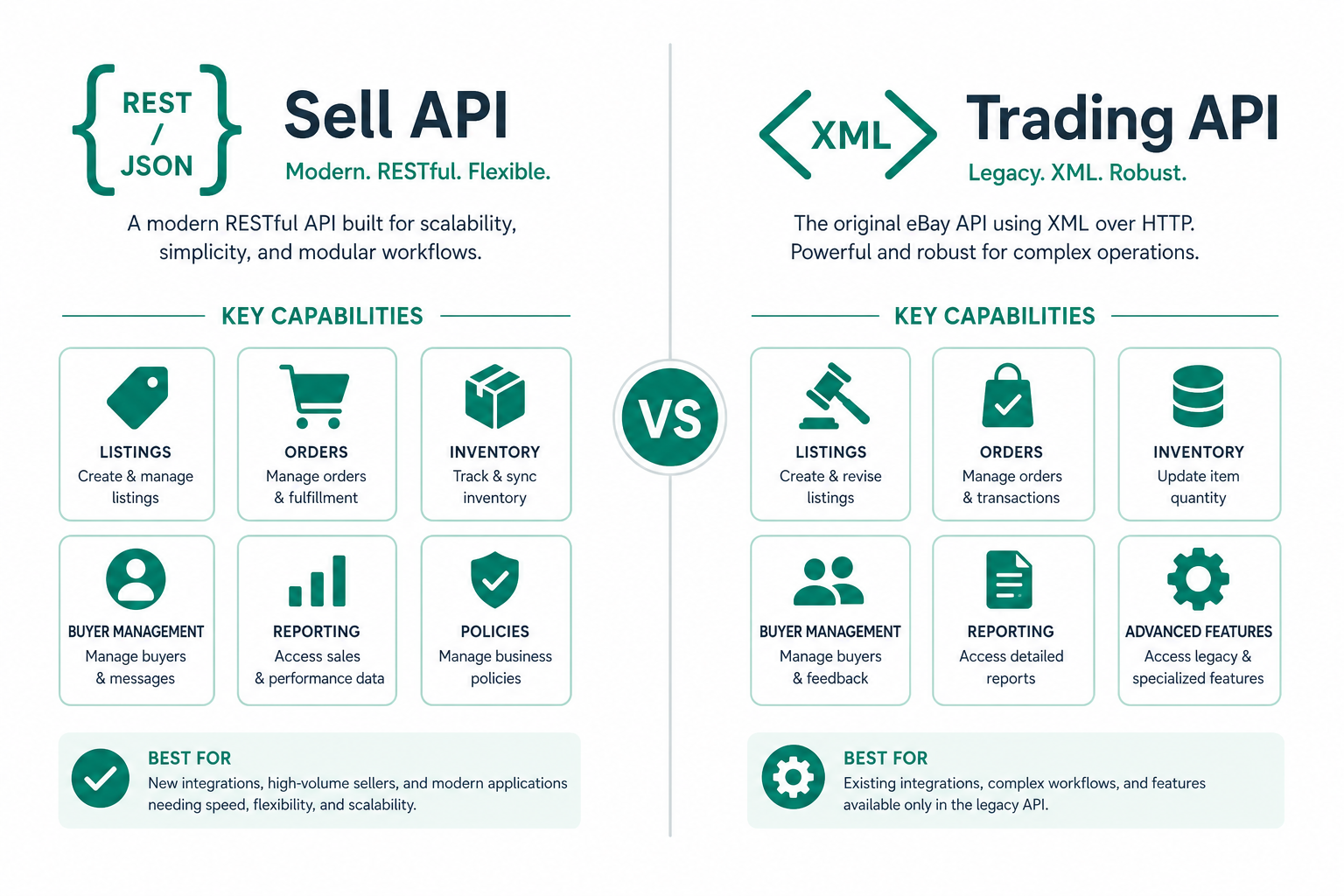
Modern REST or legacy XML? Differences, use cases, feature coverage and gradual migration strategies between Sell API and Trading API.
Read guide →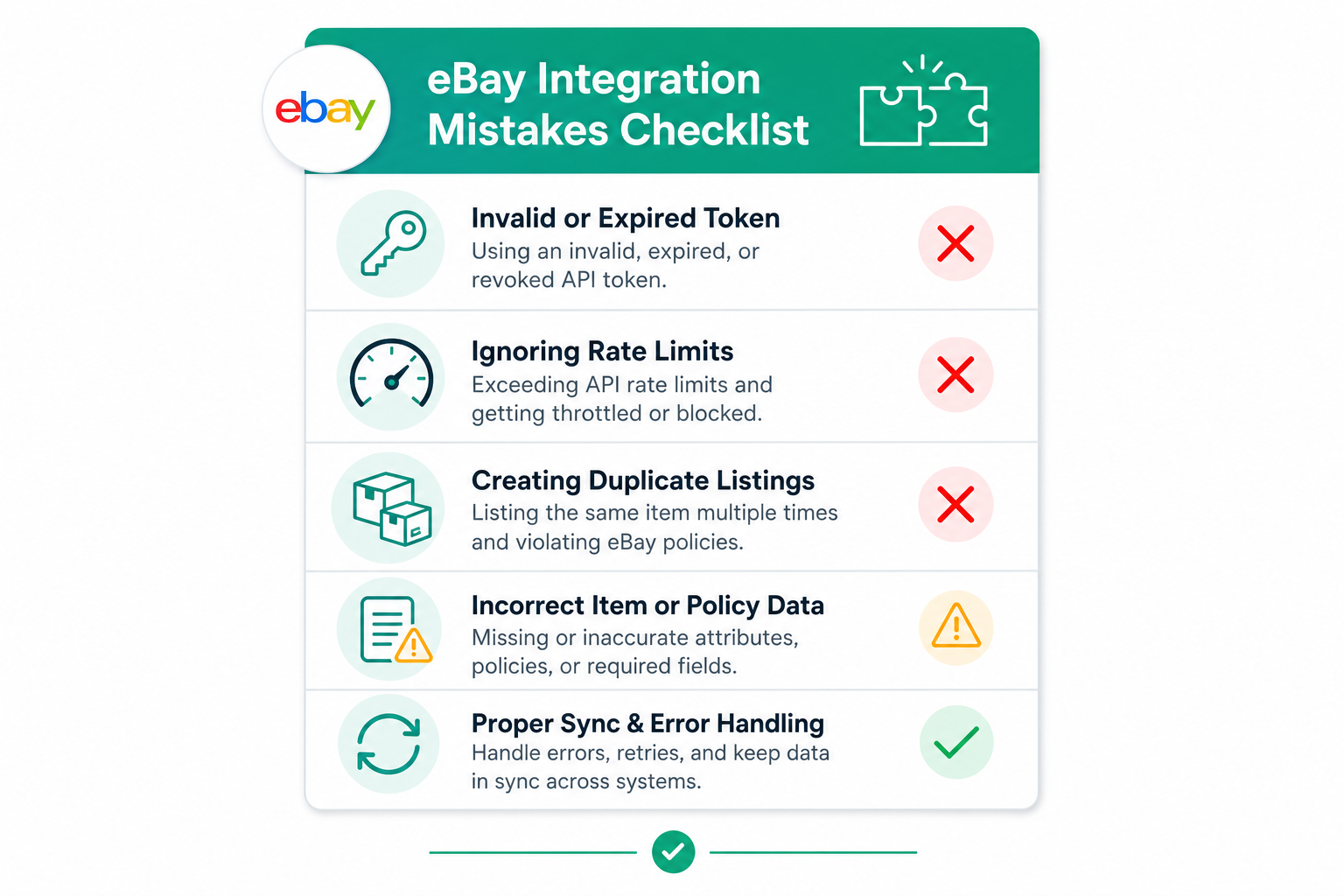
Rate limits, expired tokens, missing policies, duplicated orders: the mistakes that break eBay integrations and the patterns to prevent them.
Read guide →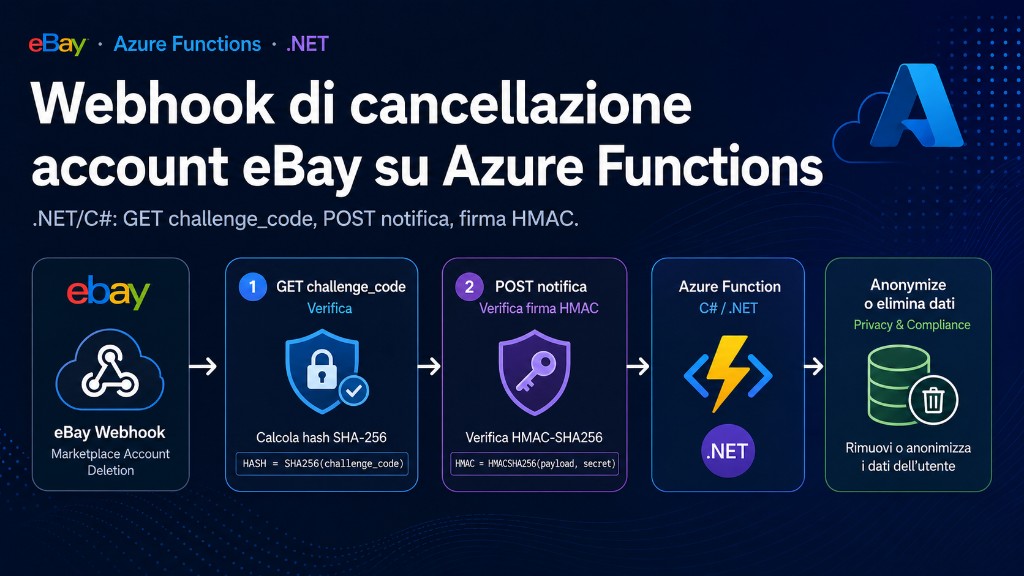
The .NET/C# on Azure Functions variant of the eBay account deletion endpoint: SHA-256 challenge, signature and secrets.
Read guide →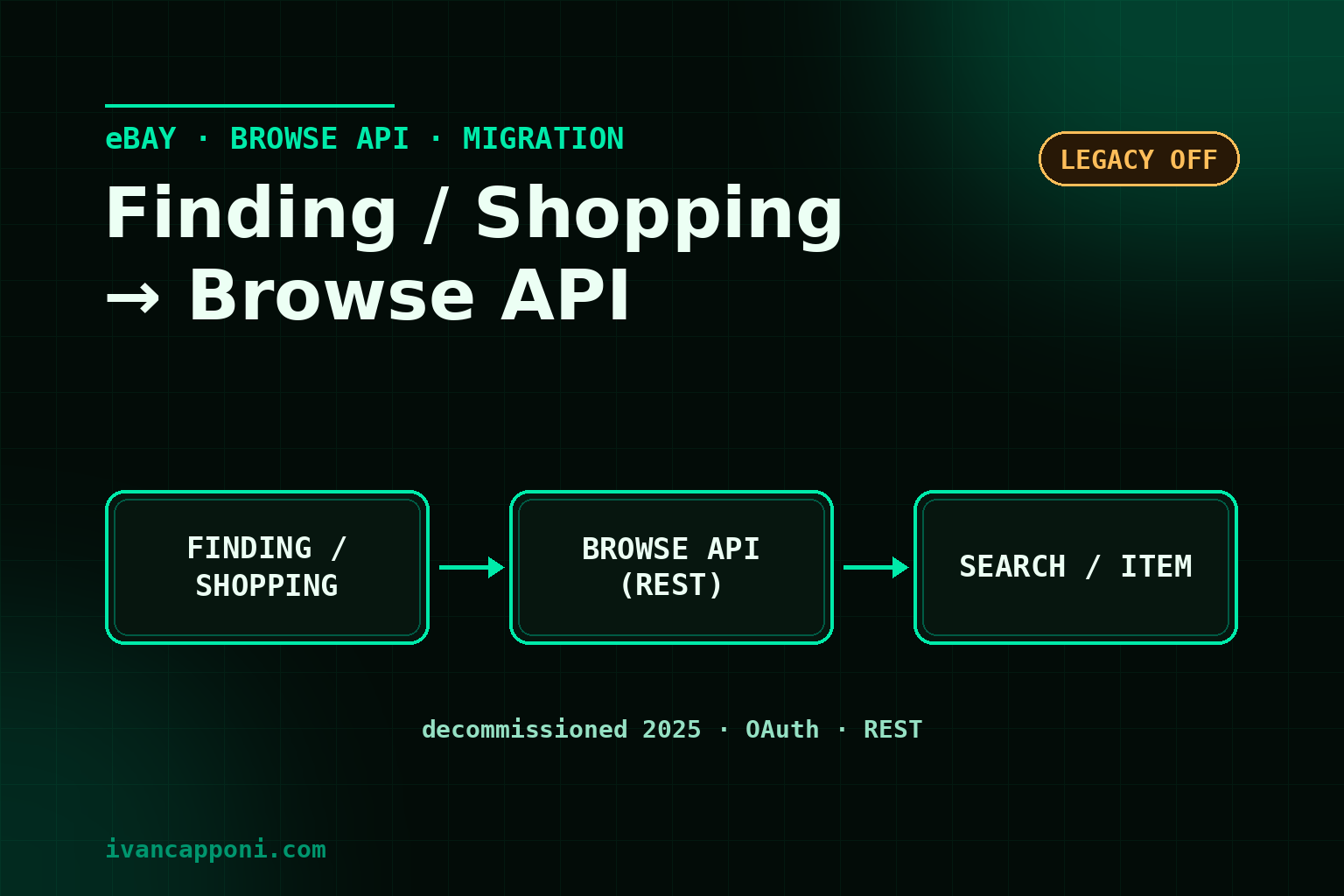
The Finding and Shopping APIs are decommissioned: how to move to the REST Browse API for search and catalog data, with OAuth and field mapping.
Read guide →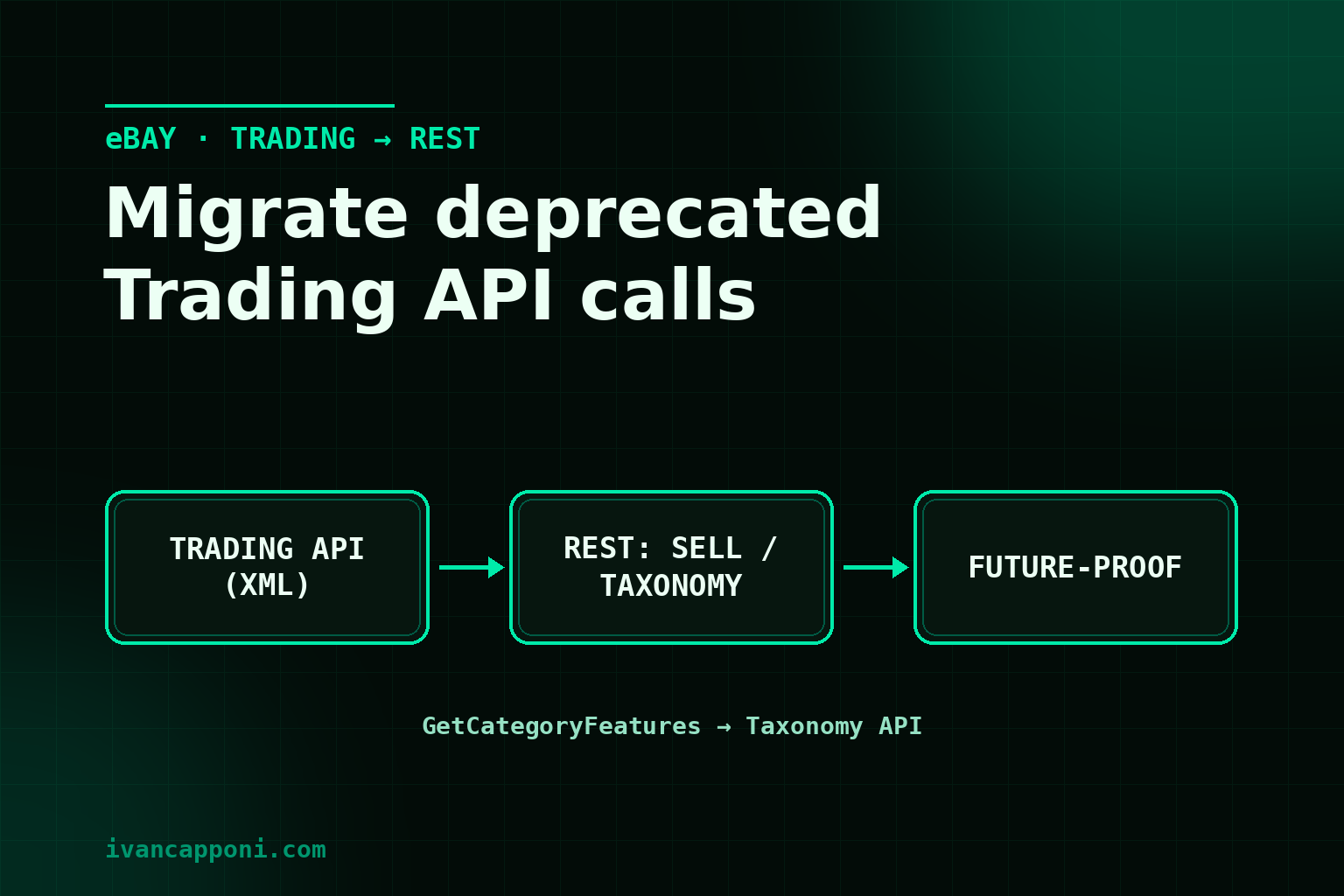
The Trading API is winding down: the map of deprecated calls to the Inventory, Fulfillment and Taxonomy APIs, with a gradual migration and the move to OAuth.
Read guide →